








AIOps Analytics, Application Performance, Application Performance Monitoring (APM), Business Transaction Monitoring, Cloud & Hybrid Environment Visibility, Digital Experience Monitoring (DEM), Full-Stack Observability, Mean Time to Resolution (MTTR) Reduction, Observability, Observability, Operational Resilience, Single Pain of Glass, Synthetic Monitoring
/
July 16, 2026
/
February 27, 2026
Got questions? Ideas? Fill out the form below & our specialist will contact you.
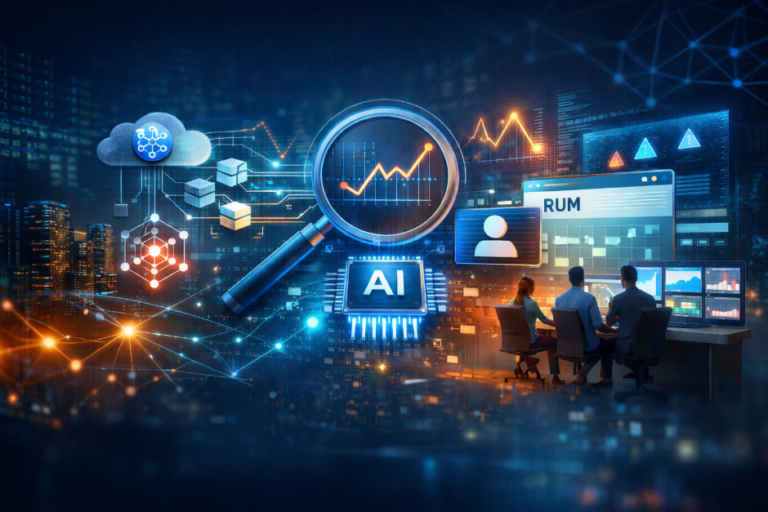
Full-stack observability is the practice of monitoring and analyzing the performance of all components within a technology stack, from infrastructure to applications. This holistic approach enables organizations to gain insights into their entire system, leading to improved operational efficiency and user experience.
By implementing full-stack observability, businesses can identify bottlenecks, troubleshoot issues in real-time, and ensure optimal performance across all layers of their IT environment. This comprehensive visibility is crucial for modern enterprises that rely on complex, interconnected systems to deliver services to their customers.
AIOps, or Artificial Intelligence for IT Operations, plays a pivotal role in enhancing observability by automating data analysis and providing actionable insights. It leverages machine learning and big data analytics to improve incident response times and reduce downtime.
With AIOps, organizations can proactively address potential issues before they escalate, ensuring smoother operations and a better user experience. For example, AIOps tools can analyze patterns in performance data to predict system failures, allowing IT teams to take preventive measures and maintain high service levels.
Application Performance Monitoring (APM) is a critical component of full-stack observability, focusing specifically on the performance of software applications. APM tools help organizations track application performance metrics, user interactions, and overall health, enabling teams to optimize application delivery.
Using APM solutions, businesses can gain insights into response times, error rates, and user satisfaction levels. This data is essential for identifying performance issues and making informed decisions about application enhancements, ultimately leading to improved user engagement and retention.
Digital Experience Monitoring (DEM) is an essential aspect of observability that focuses on the end-user experience when interacting with digital services. DEM tools provide insights into how users perceive and interact with applications, websites, and services, allowing organizations to optimize their digital offerings.
By measuring key performance indicators such as load times, transaction success rates, and user satisfaction, businesses can identify areas for improvement. This focus on the user experience helps organizations deliver high-quality digital interactions, fostering customer loyalty and driving business success.